6.28.2017

THE FIRST CORVETTE WAS ASSEMBLED IN FLINT JUNE 30 1953


On June 30th 1953, workers at a Chevrolet plant in Flint, Michigan, assemble the first Corvette, a two-seater sports car that would become an American icon. The first completed production car rolled off the assembly line two days later, one of just 300 Corvettes made that year.


The idea for the Corvette originated with General Motors’ pioneering designer Harley J. Earl, who in 1951 began developing plans for a low-cost American sports car that could compete with Europe’s MGs, Jaguars and Ferraris. The project was eventually code-named “Opel.”


In January 1953, GM debuted the Corvette concept car at its Motorama auto show at the Waldorf-Astoria Hotel in New York City. It featured a fiberglass body and a six-cylinder engine and according to GM, was named for the “trim, fleet naval vessel that performed heroic escort and patrol duties during World War II.” The Corvette was a big hit with the public at Motorama and GM soon put the roadster into production.


On June 30, 1953, the first Corvette came off the production line in Flint. It was hand-assembled and featured a Polo White exterior and red interior, two-speed Powerglide automatic transmission, a wraparound windshield, whitewall tires and detachable plastic curtains instead of side windows.

The earliest Corvettes were designed to be opened from the inside and lacked exterior door handles. Other components included a clock, cigarette lighter and red warning light that activated when the parking brake was applied–a new feature at the time. The car carried an initial price tag of $3,490 and could go from zero to 60 miles per hour in 11 or 12 seconds, then considered a fairly average speed. READ MORE

ABBEY ROAD PRESENTS THE YESTERDAY SCORE BY GEORGE MARTIN


Limited to an edition of 500, this faithful reproduction of Sir George Martin’s original orchestral arrangement for Yesterday by The Beatles comes complete with scribbles, pencil notations and an occasional tea stain.

Yesterday has become one of the most successful songs in history, recorded in Studio Two on 14th and 17th June, 1965 in the presence of Paul McCartney.


Certificate of Authentication includes a printed signature from Sir George Martin and Abbey Road Studios.

Title page and page one of the score are printed on museum quality paper, measuring 258 x 404mm within a hand-made folio measuring 335 x 485mm.


“Dad had such a deep artistic talent. He was tremendously proud of his studio work with the Beatles and his hand-written scores illuminate that intensely creative time together. He was delighted that his arrangements would not only be preserved, but be available to those who loved music as passionately as he did” - Giles Martin, son of Sir George.

The Yesterday hand-bound folio includes two sheet score, and Certificate of Authentication.


6.27.2017

ELVIS PRESLEY'S COMEBACK SPECIAL JUNE 27 1968!


There was quite a bit more than just 12 years and a few extra pounds separating the Elvis Presley of 1968 from the Elvis that set the world on fire in 1956. With a nearly decade-long string of forgettable movies and inconsistent recordings behind him, Elvis had drifted so far from his glorious, youthful incarnation that he’d turned himself into a historical artifact without any help from the Beatles, Bob Dylan or the Stones.


And then something amazing happened: A television special for NBC that Elvis’ manager Colonel Tom Parker envisioned as an Andy Williams-like sequence of Christmas carol performances instead became a thrilling turning point in Elvis’s legendary career. Elvis began taping his legendary “Comeback Special” on this day in 1968.

Much of the credit for the Comeback Special goes to the young director NBC turned to on the project. Only 26 years old but with a strong background in televised music, Steve Binder had the skills and creativity to put together a more interesting program than the one originally planned, but he’d also had the youthful confidence to tell Elvis that a successful show was an absolute necessity if he wanted to regain his relevance.


“Basically, I told him I thought his career was in the toilet,” Binder recalled in an interview almost four decades later. From the beginning, Elvis embraced almost every suggestion Binder made, including what would turn out to be the best one, which came after Binder watched Elvis jamming with his friends and fellow musicians in his dressing room one night after rehearsals.


“Wait a minute, this is history,” Binder recalls thinking. “I want to film this.” Binder sold Elvis on the idea that would become the most memorable segment of the show: an informal, “unplugged” session before a live audience. Read More Here


6.25.2017

100 YEAR OLD COLOMBO UNDERBOSS RELEASED FROM PRISON!


Former Colombo crime family underboss John “Sonny” Franzese is back on the streets after being released from prison on Friday. The longtime wiseguy was welcomed home with open arms by his family at his daughter’s place in Brooklyn, New York.

John "Sonny" Franzese  center

At 100 years old, Franzese was the oldest inmate in the federal prison system in the United States. He now will be looking to enjoy his last days in freedom surrounded by his loving family.


Newsday  reports John "Sonny" Franzese left the Federal Medical Center in Devens, Massachusetts, in a wheelchair just before noon Friday. He was serving a 50-year sentence for bank robbery.


He was around when Joe Profaci was the boss. He was a capo in the mid-1950s and by 1964 he had been promoted to underboss. In the mid-1960s, he was convicted of masterminding several bank robberies.
John "Sonny" Franzese, Michael Franzese's father, 100 years old, came out of prison on June 23, 2017. If he ever decide to write a book about his life in the Colombo family, it COSA NOSTRA FACEBOOK PAGE

His son, Michael, says the elder Franzese is planning to live with a daughter in Brooklyn. Franzese was accused of being involved in loan sharking and extortion. The U.S. Bureau of Prisons confirms he was the oldest prisoner until his release. He was paroled at least six times since his 1967 conviction, but each time ended back in prison.


LAST PACKARD AUTOMOBILE ROLLED OFF THE ASSEMBLY LINE 6-25-1956


The last Packard–the classic American luxury car with the famously enigmatic slogan “Ask the Man Who Owns One”–rolls off the production line at Packard’s plant in Detroit, Michigan on this day in 1956.


Mechanical engineer James Ward Packard and his brother, William Dowd Packard, built their first automobile, a buggy-type vehicle with a single cylinder engine, in Warren, Ohio in 1899. The Packard Motor Car Company earned fame early on for a four-cylinder aluminum speedster called the “Gray Wolf,” released in 1904.


It became one of the first American racing cars to be available for sale to the general public. With the 1916 release of the Twin Six, with its revolutionary V-12 engine, Packard established itself as the country’s leading luxury-car manufacturer. 1956 Packard Models


World War I saw Packard convert to war production earlier than most companies, and the Twin Six was adapted into the Liberty Aircraft engine, by far the most important single output of America’s wartime industry.

Packards had large, square bodies that suggested an elegant solidity, and the company was renowned for its hand-finished attention to detail. In the 1930s, however, the superior resources of General Motors and the success of its V-16 engine pushed Cadillac past Packard as the premier luxury car in America.


Packard diversified by producing a smaller, more affordable model, the One Twenty, which increased the company’s sales. The coming of World War II halted consumer car production in the United States.

In the postwar years, Packard struggled as Cadillac maintained a firm hold on the luxury car market and the media saddled the lumbering Packard with names like “bathtub” or “pregnant elephant.”

THE MAGICIAN: BE SMART-SOLVE PROBLEMS


You might be set up to be the smart one and solve a problem or two for someone else. While it might be your idea of fun to perform and be clever, try to keep things simple, especially if this is a work-related issue. It will cost you little or no effort and win you a lot of admiration, and maybe some monetary reward later....

In the present position, this card signals the urgency of a situation of which you must seize to take advantage. In this position, The Magician indicates that your ability to be yourself and impress the right person or people can have a big impact on the direction your life takes. The Magician in the present position is a metaphor for your free will and good luck combining in a rare opportunity to move way ahead in life. When this card is in this position, take your great leap forward.

In the future position, The Magician is a card of amazing potency. This is an indication of your wishes being granted because you take the time to earn everything you want. The Magician represents manifesting your desires and visions. In the future, what you want will arrive when you follow the necessary course of action. You will no longer have to dream about being it; you will have become exactly who and what you wanted to be. More about this card

6.24.2017

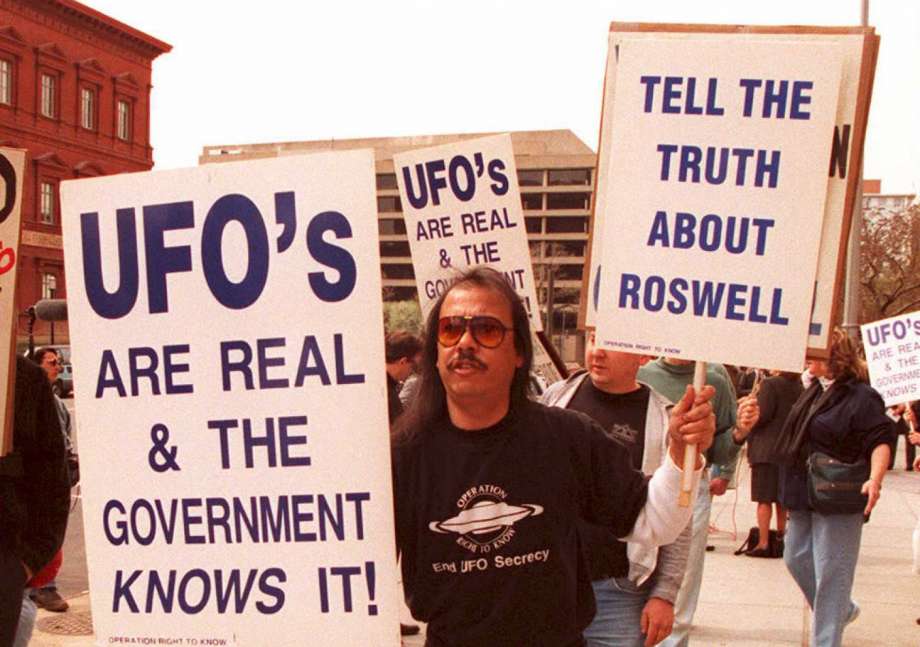
US AIR FORCE REPORT ON ROSWELL JUNE 24 1997


On this day in 1997, U.S. Air Force officials release a 231-page report dismissing long-standing claims of an alien spacecraft crash in Roswell, New Mexico, almost exactly 50 years earlier.

Public interest in Unidentified Flying Objects  or UFOs, began to flourish in the 1940s, when developments in space travel and the dawn of the atomic age caused many Americans to turn their attention to the skies.


The town of Roswell, located near the Pecos River in southeastern New Mexico, became a magnet for UFO believers due to the strange events of early July 1947, when ranch foreman W.W. Brazel found a strange, shiny material scattered over some of his land.


He turned the material over to the sheriff, who passed it on to authorities at the nearby Air Force base. On July 8, Air Force officials announced they had recovered the wreckage of a “flying disk.” A local newspaper put the story on its front page, launching Roswell into the spotlight of the public’s UFO fascination.


The Air Force soon took back their story, however, saying the debris had been merely a downed weather balloon. Aside from die-hard UFO believers, or “ufologists,” public interest in the so-called “Roswell Incident” faded until the late 1970s, when claims surfaced that the military had invented the weather balloon story as a cover-up.

Believers in this theory argued that officials had in fact retrieved several alien bodies from the crashed spacecraft, which were now stored in the mysterious Area 51 installation in Nevada.

Seeking to dispel these suspicions, the Air Force issued a 1,000-page report in 1994 stating that the crashed object was actually a high-altitude weather balloon launched from a nearby missile test-site as part of a classified experiment aimed at monitoring the atmosphere in order to detect Soviet nuclear tests.

Related Posts Plugin for WordPress, Blogger...

addtoany